

From childhood upwards, we play games as a safe (and strangely joyful) way to battle, strategize, even lose without it coming to fisticuffs. Artificial intelligence grew up playing games too, with developers using the structured rules, scoring systems, and win/loss outcomes to train machines to learn, to improve, even to beat us.
In chess, bots have been bettering humans for years now. Yet our “loser” species still gathers at sunny park tables, in dank school gyms, and online in droves, all in hopes of crying, “Checkmate!” The resilience of chess is commonly cited as evidence that—even if AI surpasses us in various pursuits—humans won’t just give up.
However, there’s more to say about the intersection of technology and chess, in particular how the game has evolved with technology, including AI. Thankfully, the broadcaster and writer David Edmonds—co-author of Bobby Fischer Goes to War (2004) and editor of the essay collection AI Morality (2024)—has spent decades observing this, both as a spectator and behind the board himself.
—Tom Rachman, AI Policy Perspectives
By DAVID EDMONDS
Among thousands of tournament games cited in the Batsford book of chess openings, tucked into the top right-hand column of Page 235, is an example of how white should not play.
Explaining the Closed Sicilian Defense opening, the authors (former world champion Garry Kasparov and the British grandmaster and chess columnist Raymond Keene) spotlight a game in which black is already ahead as early as move 11. Indeed, the player with the white pieces ended up losing. I remember because that player was me.
That is my humiliating contribution to chess theory: what not to do. The book was published in 1982, and I’ve barely picked up a pawn in anger in the intervening four decades. But I still follow the chess world, and if there’s a tournament in London, I’ll go to watch, spending hours absorbed in the intricacies of the 64 squares.
As the digital revolution and AI juggernaut move through our lives, we may wonder whether there will still be domains in which humans can continue to find enjoyment and meaning. Chess offers a hopeful case study.
Chess and AI have had a long relationship. The great forefather of artificial intelligence Alan Turing wrote the first chess algorithm in 1948. The following year, another seminal figure, Claude Shannon, distinguished two ways that a computer could play chess: by brute force, calculating every possible move; or by selective search, like a human.
Chess also proved a favourite way to evaluate AI advancement, both because many key innovators were keen players but also because the game’s mathematical structure and its win/loss conditions created benchmarks for comparing machine progress to human performance.
A longstanding goal—seemingly impossible at first—was to outclass the best humans in a game that has near-infinite permutations. Defeating humans at chess became the programmers’ ultimate challenge, like runners seeking to break the four-minute mile or climbers reaching the summit of Mount Everest, both of which proved easier. Finally, in 1997, IBM’s Deep Blue vanquished Kasparov, the then-reigning world champion. A dejected Kasparov insinuated that there had been human intervention.
For a while, chess players comforted themselves with the thought that a hybrid combination of human and machine could outwit machine alone. That period has long passed. Today’s best player, Magnus Carlsen, would be trounced were he to compete in a series of games with my mobile phone.
In 2017, DeepMind’s AlphaZero took machine chess to the next level. While Deep Blue had relied on brute strength with some input from strong humans, AlphaZero was simply programmed with the basic rules, and then trained itself through reinforcement learning. In its learning phase, it played tens of millions of games against itself in just a few hours, then crushed the chess engine Stockfish. (Stockfish adapted its methods accordingly, and is now the leading chess engine.)
World chess champions of the past exuded an aura. Their talents seemed mysterious, supernatural. In part, that’s because few people, then and now, can comprehend the depth of thought that elite players achieve at the board. When it comes to music, we may never compose like Mahler, but we can appreciate Mahler’s symphonies. By contrast, we can neither play like Magnus Carlsen nor fully appreciate his games. It’s for this reason that the Armenian-born grandmaster, Lev Aronian, once confessed to me that being one of the world’s top players was desperately lonely.
Carlsen has achieved the highest rating of any human in history. And, no surprise, he strikes a confident pose. Yet his strut no longer carries complete conviction. To spectators armed with portable chess engines, the chess gods have been humbled.
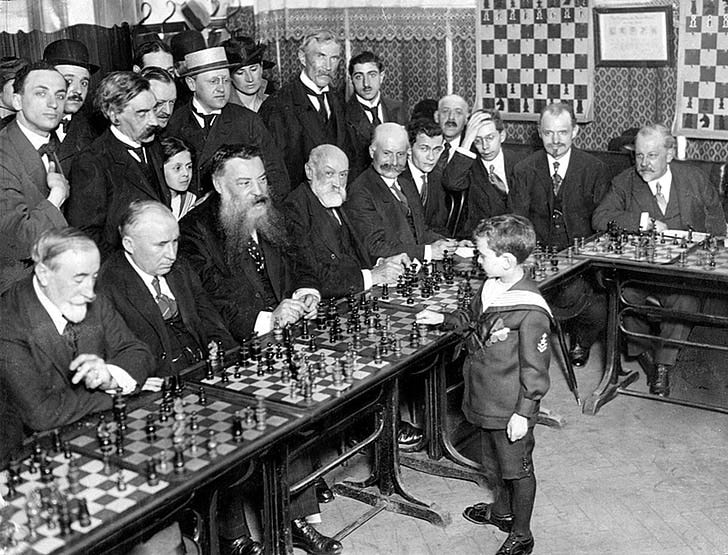
Even so, chess has not dwindled in popularity. On the contrary, more people are playing it than ever. The game received a boost during Covid, when we all hunkered down in our homes, connected by the Internet. Another boost came from the hit Netflix drama, The Queen’s Gambit. Meanwhile, a younger generation of telegenic chess masters has gained avid YouTube followings, turning commentary and stunts into short-clip entertainment.
Here are 11 ways that technology has changed chess. The 11th is the most interesting:
Opening Preparation. The systematic study of chess openings goes back a couple of centuries or more. Sequences of opening moves were mapped out—as in that 1982 book that included my embarrassing loss. But chess engines allow for a depth of opening analysis that was inconceivable in 1982. This means that 25 moves may pass before grandmasters find themselves in unfamiliar territory nowadays. Some openings have also been resurrected because engines have shown the positions to be more survivable than previously recognized.
Opponent Preparation. Even in amateur tournaments, players routinely prepare for opponents in an individually tailored way. This is made possible because the games of each opponent are available online.
Connectivity. Fancy a game? There are endless online adversaries willing to take you on, day and night, from India to Iceland, Cape Town to Chicago.
No More Correspondence Chess. There was once a thriving chess scene in which games were played remotely over a long time period—months, sometimes years—with moves typically sent by post. How quaint.
No More Adjournments. Historically, world championship games would sometimes stop after five hours to resume later. That can’t happen anymore, since players might simply identify the optimal continuation with the help of an engine. Time limits now ensure games finish within a single session.
Shorter Games. Many in the online chess audience don’t have patience for lengthy games. For them, quicker time controls—Rapid (less than an hour); Blitz (3-5 minutes); or Bullet (under 3 minutes)—are more thrilling.
Different Formats. Now that computers have shown with such depth which opening sequences are optimal, the early part of a game has been transformed into a feat of memory rather than creativity. As a result, Fischer Random (advocated early on by the ex-American world champion Bobby Fischer) has become increasingly popular. In Fischer Random, the starting position of the major pieces behind the pawns is randomized, making opening homework effectively impossible. It’s sometimes called Freestyle Chess, or Chess960 because there are 960 possible ways for the pieces to be shuffled.
Job Generation. With a potential global audience, some players can now earn a decent living live-streaming their games, or offering online training.
Roasting of Champions. This is an irksome development. Since chess engines assign an instant numerical evaluation of the position after each move (e.g. +1 means white is better by roughly one pawn), any patzer can see when a grandmaster has blundered, and is free to abuse them in online comments.
Cheating. There have always been cheating accusations in chess. In 1978, the Soviet dissident Viktor Korchnoi claimed that the aides of his opponent, Anatoly Karpov, were using the flavour of the yogurt handed to Karpov to secretly convey messages. More recently, suspicion (tongue-in-cheek, but taken seriously by online trolls) has been raised of illicit advice being transmitted via vibrating sex toys. In elite tournaments, grandmasters are now searched before they enter the playing arena, even accompanied to the toilet. Spectators, meanwhile, are prohibited from carrying phones, to prevent them signalling the best continuation. But in online games, cheating is almost impossible to prevent. Platforms try to detect cheats by comparing human moves to the recommendations of top engines. But if savvy cheaters consult an engine just once or twice in a game, they may win without being detected.
And so to the 11th effect on chess: the expansion of human imagination.
In the last few years, there has been a slight but detectable shift in grandmaster play, as humans learn from machines, both through gameplay against bots and by using machine insights to prepare for human competition.
People who don’t play chess may imagine that what distinguishes strong from weak players is calculating power. And it’s true that top grandmasters can analyse many moves in advance. But their edge is tougher to articulate. It involves superior pattern recognition, with an intuitive sense for where their pieces should be placed and how a position should advance. Likewise, Mozart felt how a composition ought to develop; his instincts about building tension and creating contrasts were the product in part of having internalized countless musical patterns.
For chess players, some moves seem ugly. It might feel wrong to shunt a knight to the edge of the board, to break up a pawn structure, or to expose the king. But computers don’t feel anything. In chess, they care about patterns and the interplay between pieces only to the extent that they’re relevant to the ultimate objective: victory.
However, bots don’t necessarily play robotically. They produce moves that astonish and inspire human players, even make them laugh with surprise. One famous case of AI invention across the board came in another game, Go, when the AlphaGo program was facing a top human player, and produced a move that caused professionals to gasp. “Move 37” is still cited with awe, as something a person would never have done, but that worked sublimely.
Likewise, chess engines regularly expand the imagination of human chess players, pushing beyond the habitual “correct” move they’ve seen many times before or have learned from books of chess theory. AI has even dabbled in the art form of creating beautiful chess puzzles. And empirical studies indicate that leading players may pick up new ideas and strategies from machines.
Machines, in other words, can make humans more resourceful and inventive, breaking down rigid modes of thinking. The implausible becomes plausible. The readily dismissed becomes the carefully considered. This evolution of chess illustrates a broader idea in the development of AI that may prove immensely valuable in science and elsewhere in human endeavour: that how AIs think may help human experts learn new ideas themselves.
In his book The Silicon Road to Chess Improvement, the grandmaster Matthew Sadler argues that chess engines can improve every player, and he documents some of the counterintuitive patterns that humans could pick up from AI. By way of illustration, during a top tournament this January, the Indian grandmaster Arjun Erigaisi (playing against Vladimir Fedoseev of Russia) advanced his pawns in a way that looked reckless. In fact, computer analysis indicated he was still ahead after 28 moves. However, he blundered and lost. The danger of learning from a computer is that success may require you to proceed with computer-level accuracy.
As AI undertakes more activities formerly done only by people, it’s worth asking why human chess persists—and will likely continue to do so.
A Canadian philosopher, Bernard Suits, pointed out in his 1978 book The Grasshopper: Games, Life and Utopia that what defines “games” is that they involve the voluntary attempt to overcome unnecessary obstacles. Therein lies a defence against AI encroachment. In a market economy, companies aim to remove or overcome obstacles in the pursuit of profit. In games, obstacles have been deliberately inserted as an indispensable feature. What we enjoy in playing chess is testing our cognitive abilities. What we enjoy in watching chess is two humans pitting their wits against each other in a socially constructed activity where difficulty enhances enjoyment and satisfaction.
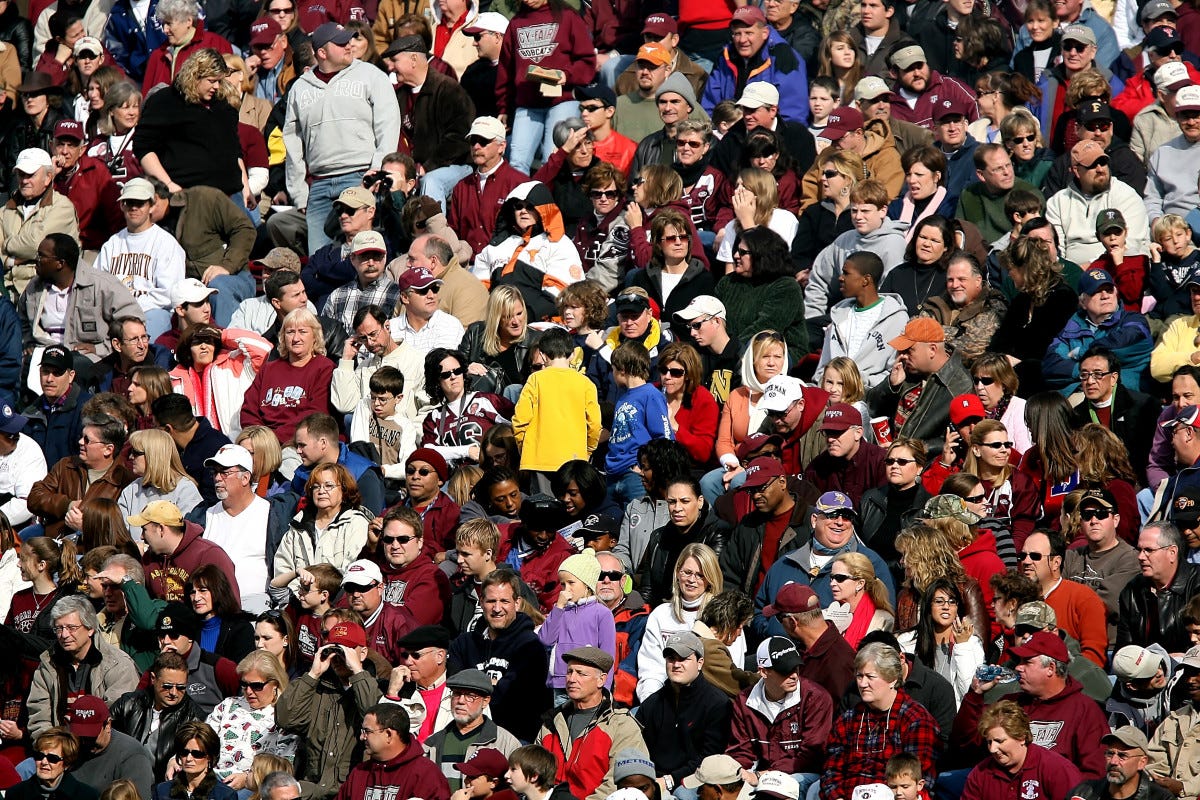
There’s also a narrative element to caring about games. The contest—whether intellectual or physical—is absorbing precisely because it involves conscious creatures. In elite chess, there’s the backstory: the players’ rise, their subsequent ups and downs, their history with specific opponents.
But watch an engine-against-engine tournament like TCEC (the Top Chess Engine Championship), and you’ll soon fall asleep. Computers aren’t competing after a divorce, or an illness, or the loss of a parent. Humans have character traits that spill onto the board, such as aggression (or passivity); patience (or impatience); equanimity (or volatility); and resilience (or fragility). Winning and losing have emotional resonance for a human—but not for AlphaZero.
It’s these qualities that guard against AI advance. AI might gobble up some of our jobs; even human-authored articles like this one may become rarer. But AI won’t take our chess.